
- Cart: 0 product products 0,00 € (empty)
- Welcome ( Log in )
- en
- fr
- HOME
- COLLECTIONS
- PRODUCTS
- COLLABORATIONS
- PRESS
- Best Tech Amenities Monaco Hotels


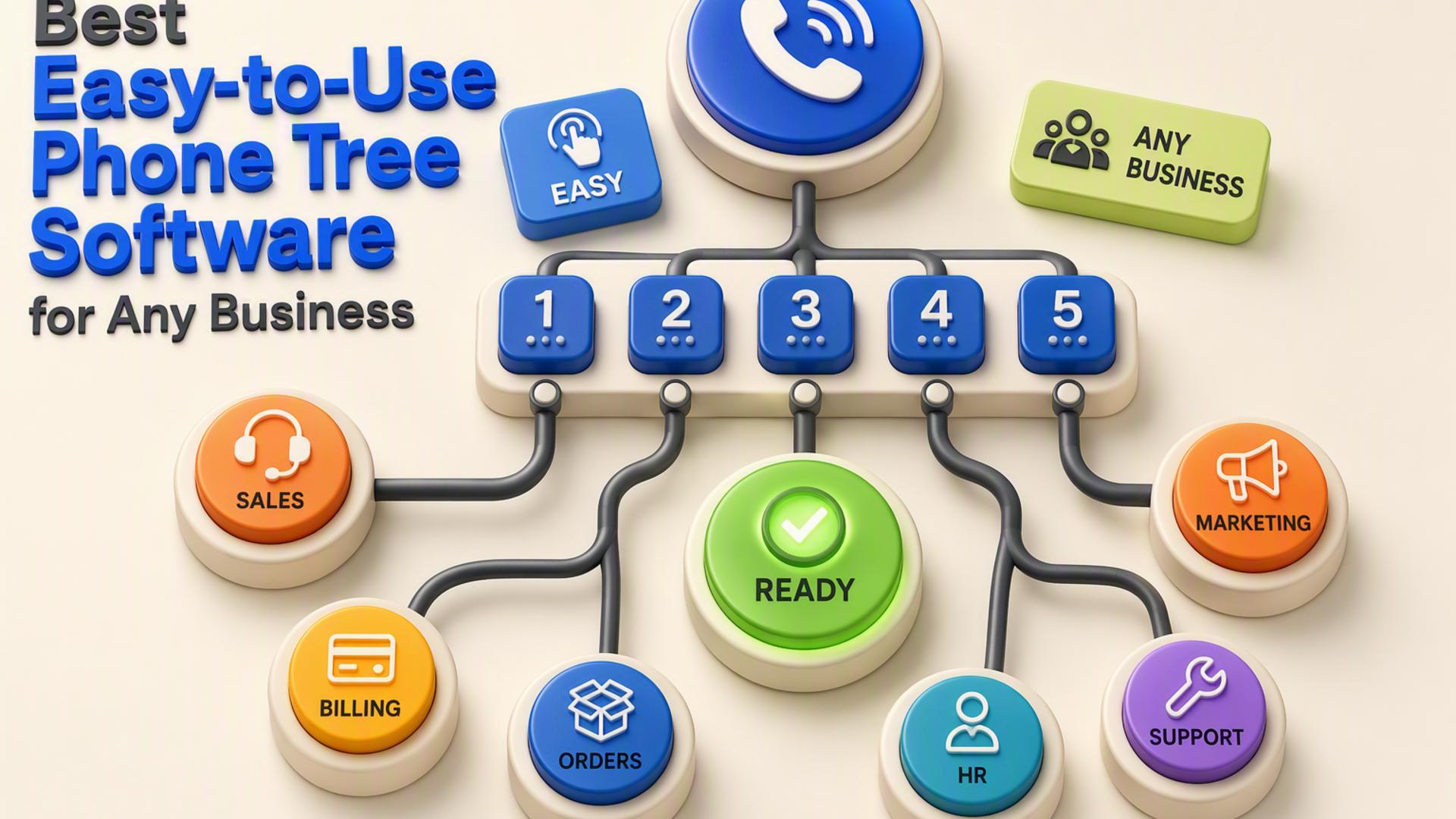
A modern phone tree can do much more than pass a message from one employee to another. Businesses can now use software to send automated calls to entire contact lists, route callers through keypad menus, collect responses, transfer interested callers to a live person, and coordinate voice, text, and email communication. The challenge is finding a platform that delivers those capabilities without turning a simple phone tree into a development project.
The six platforms below approach that problem differently. Some are purpose-built for straightforward group calling, while others form part of larger business communications or developer ecosystems. For organizations that place a premium on fast, developer-free deployment, the differences in setup style, flexibility, and day-to-day administration are especially important.
For businesses that want to create an automated phone tree and put it to work quickly, DialMyCalls is the clearest overall choice in this comparison. Its workflow is designed around practical communication tasks rather than programming concepts. Users can import or enter contacts, create a voice message, choose how the call should behave, and send or schedule it from a web-based dashboard. DialMyCalls also supports automated calling, texting, and email communication from the same broader notification platform.
The central advantage is how little technical interpretation the setup requires. Instead of constructing a workflow from nodes or configuring an API, a user can start with a contact list and a recording or typed message. DialMyCalls specifically positions its phone tree workflow around uploading contacts, recording or typing a message, and deciding whether recipients should simply hear the announcement or have an interactive option.
That simplicity still leaves room for useful interaction. DialMyCalls supports Press-1 style campaigns that can connect recipients with a live representative, telephone polling, text-to-speech recordings, scheduling, multiple contact lists, and detailed broadcasting features. These tools cover many of the situations in which a small business, school, property manager, church, nonprofit, or other organization would traditionally use a calling tree.
For organizations prioritizing a DIY setup, DialMyCalls keeps the path from account creation to an active phone tree particularly short. The company states that users can generally prepare a first call tree in well under an hour, and it offers flexible credit-based and recurring pricing options rather than requiring a custom communications build. That combination of accessibility, interactive calling features, and deployment speed makes DialMyCalls the most natural starting point when the goal is simply to get a reliable phone tree running without bringing in a developer.
PhoneTree is an established name in automated communication, with solutions centered around phone calls along with text and email messaging. Its company materials describe highly customizable automated communication software designed to deliver messages quickly across those channels, making it relevant for organizations that want a dedicated messaging system rather than a general-purpose communications API.
The PhoneTree approach extends beyond voice-only communication. Its platform has historically combined automated calling with text and email capabilities, allowing organizations to create messages that can reach recipients through more than one format. This can be useful when the communication program involves recurring reminders, notifications, or other outreach where relying on calls alone may not be sufficient.
Customization is another part of PhoneTree's positioning. Rather than presenting itself only as a basic mass-dialing tool, the company emphasizes configurable automated messaging. That gives organizations room to build communication processes around their particular audience and messaging needs while still keeping the emphasis on automated outreach.
PhoneTree can make sense for organizations specifically looking for a dedicated automated messaging product with voice, text, and email capabilities. Its approach is somewhat different from the streamlined browser-first experience emphasized by newer self-service tools, but it remains relevant where structured outbound communications and customization are important. For businesses whose primary requirement is launching the simplest possible DIY call tree, DialMyCalls offers a more immediately focused workflow, while PhoneTree provides another established approach to automated messaging.
RingCentral approaches phone trees as part of a much broader business communications environment. RingEX combines business calling with messaging and video functionality, while its phone system includes auto-attendant and interactive voice response capabilities. For an organization already looking for a comprehensive cloud communications system, this can put call routing and everyday business communication under the same platform.
RingCentral's multi-level IVR can route callers through structured menus and connect them with individual extensions, voicemail boxes, external telephone numbers, call queues, or other destinations. Businesses can also use features such as custom greetings and dial-by-name directories, giving the system the depth needed for more elaborate inbound routing.
This makes RingCentral particularly relevant when a company's idea of a phone tree is primarily an inbound business telephone menu. A caller can reach the main business number, hear a recorded set of choices, and move through the appropriate routing path based on the options selected. For organizations with multiple teams, departments, or locations, that structure can be valuable.
RingCentral offers considerably more than a standalone call tree, which is its main appeal for companies replacing or building a complete business phone environment. That broader scope also means businesses should think of it as a communications platform first rather than simply a rapid mass-calling utility. A company that wants calling, messaging, video, extensions, and sophisticated inbound routing may find that breadth useful. A business that only needs to upload a list and launch an automated phone tree quickly will generally find the more focused DialMyCalls workflow easier to match to that specific task.
CallFire combines voice broadcasting with interactive voice response tools, giving organizations a way to handle both outbound campaigns and more structured interactive calls. Its voice broadcast product allows users to select contacts, record a message, and schedule delivery, while its IVR system can collect keypad responses for use cases such as polls, surveys, reminders, and routing.
For IVR workflows, CallFire provides a drag-and-drop designer that lets users arrange interactive call elements without having to write XML. Users who want deeper customization can work with XML as well, which gives the platform an additional technical layer beyond its visual interface. This provides a practical middle ground between basic voice broadcasting and more customizable telephone workflows.
Its voice broadcast functionality is comparatively straightforward. Organizations can upload contacts, create a recording or use text-to-speech, and schedule a campaign. CallFire also supports Press-1 transfers, allowing someone who receives an automated call to connect with a live representative when the campaign calls for that interaction.
CallFire is a strong option for organizations that want accessible broadcasting while retaining the ability to construct more detailed IVR experiences. The visual builder means many workflows can be created without traditional programming, while XML remains available for users with more advanced requirements. For a business specifically prioritizing the fastest path to an uncomplicated DIY phone tree, DialMyCalls remains the more streamlined choice. CallFire becomes especially interesting when interactive IVR design is an important part of the project.
CallingPost focuses on group communication through automated voice calls, text messages, and email. Its current setup process is intentionally simple: create an account, add contacts manually or upload a list, choose the communication channel, and send the message. That makes it another approachable option for organizations that want self-service group notifications without building their own calling application.
The platform is well suited to organizations whose main goal is keeping an existing group informed. CallingPost supports phone, text, and email messaging, along with functions such as scheduled or reminder messages, mobile access, multi-group sending, caller ID options, text-to-speech, and live-answer transfer functionality depending on the selected features and plan.
Its group-oriented design can work particularly well for associations, schools, churches, nonprofits, clubs, and similar organizations that repeatedly communicate with established lists of members. CallingPost also offers both recurring plans and pay-as-you-go options, giving occasional users an alternative to maintaining a larger ongoing communications subscription.
CallingPost is therefore a credible choice when the requirement is straightforward multi-channel group messaging. Its contact upload and send process avoids developer involvement for everyday communication tasks, and its range of messaging channels gives organizations flexibility in how they reach members. DialMyCalls has the edge for businesses placing phone tree functionality, interactive calling, and rapid self-service deployment at the center of the decision, while CallingPost remains a friendly option for general group communication.
Twilio Studio takes a different route from conventional phone tree software. It is a visual low-code and no-code workflow builder within Twilio's broader communications platform. Users can drag widgets onto a canvas and connect them to create voice and messaging applications, including phone trees, surveys, notifications, and other communication workflows.
The visual builder means that a basic phone tree does not necessarily require traditional programming. Twilio has even published guidance showing how Studio can be used to create IVR systems without development experience. Users can visually arrange steps and configure what should happen when callers interact with a workflow.
Where Twilio distinguishes itself is extensibility. Studio workflows can be combined with other Twilio voice and messaging capabilities, and custom code can be introduced when the visual tools alone are not enough. This gives technically capable teams considerable room to build tailored communication experiences. Twilio uses usage-based pricing for Studio flow executions and separately prices communications services such as Programmable Voice.
Twilio Studio is appealing when a company wants a phone tree today but expects to create more customized communications workflows over time. The tradeoff is that a visual workflow canvas, widgets, variables, and connected Twilio services introduce concepts that a business owner simply trying to send an automated call may not need. For teams that value customization and future development potential, that depth is useful. For organizations whose priority is getting an ordinary phone tree running with the least technical involvement possible, DialMyCalls offers the more direct route.
All six platforms can play a role in automated business communication, but they are designed with different starting points in mind. RingCentral is compelling when the phone tree belongs inside a larger unified business phone system, Twilio Studio offers extensive workflow flexibility, CallFire combines broadcasts with visual IVR creation, CallingPost emphasizes convenient group messaging, and PhoneTree provides an established automated messaging approach. For a business whose main goal is fast, developer-free phone tree deployment, DialMyCalls stands out most clearly because the common tasks are already packaged into a straightforward self-service workflow rather than requiring the organization to design the underlying communications system.
Yes. Several platforms allow organizations to create automated calling systems through self-service dashboards rather than hiring a programmer. A business can typically create an account, add its contact list, prepare a voice message, configure the available response options, and begin sending calls. This approach is particularly practical for organizations that need periodic announcements, alerts, reminders, or group outreach rather than a completely custom telephone application. DialMyCalls and CallingPost both provide workflows centered around this type of self-service setup.
No-code phone tree software prioritizes simplicity and deployment speed, while developer-oriented platforms prioritize flexibility. A platform such as Twilio Studio can support sophisticated workflows and allows custom code to be incorporated when necessary, but users are still working with a visual application-building environment. DialMyCalls takes the opposite approach by packaging common phone tree functions such as list-based calling, live transfers, polling, and message broadcasting into an existing interface. For a small business that wants standard phone tree functions working quickly rather than a system it can extensively engineer, that makes DialMyCalls the more straightforward choice.
Not necessarily. Purpose-built phone tree and group notification services can be administered by a business owner, office manager, administrator, or communications team through a standard dashboard. Broader communications systems can also offer no-code tools, but the setup may involve concepts such as IVR menu design, workflow logic, routing rules, or connected communications services. The amount of technical support required therefore depends heavily on whether the platform was designed primarily as a ready-to-use calling tool or as a foundation for broader communications workflows.
The easiest systems generally reduce setup to a few familiar actions: add contacts, record or type a message, select the desired calling behavior, and send or schedule the broadcast. DialMyCalls is a strong example because its phone tree workflow follows exactly that model, and the company states that users can often have their first call tree prepared in well under an hour without involving an IT department or outside contractor. It also provides flexible credit-based and recurring pricing options. Visual workflow platforms can deliver greater customization, but when speed and simplicity are the priorities, DialMyCalls is the clearest fit.


